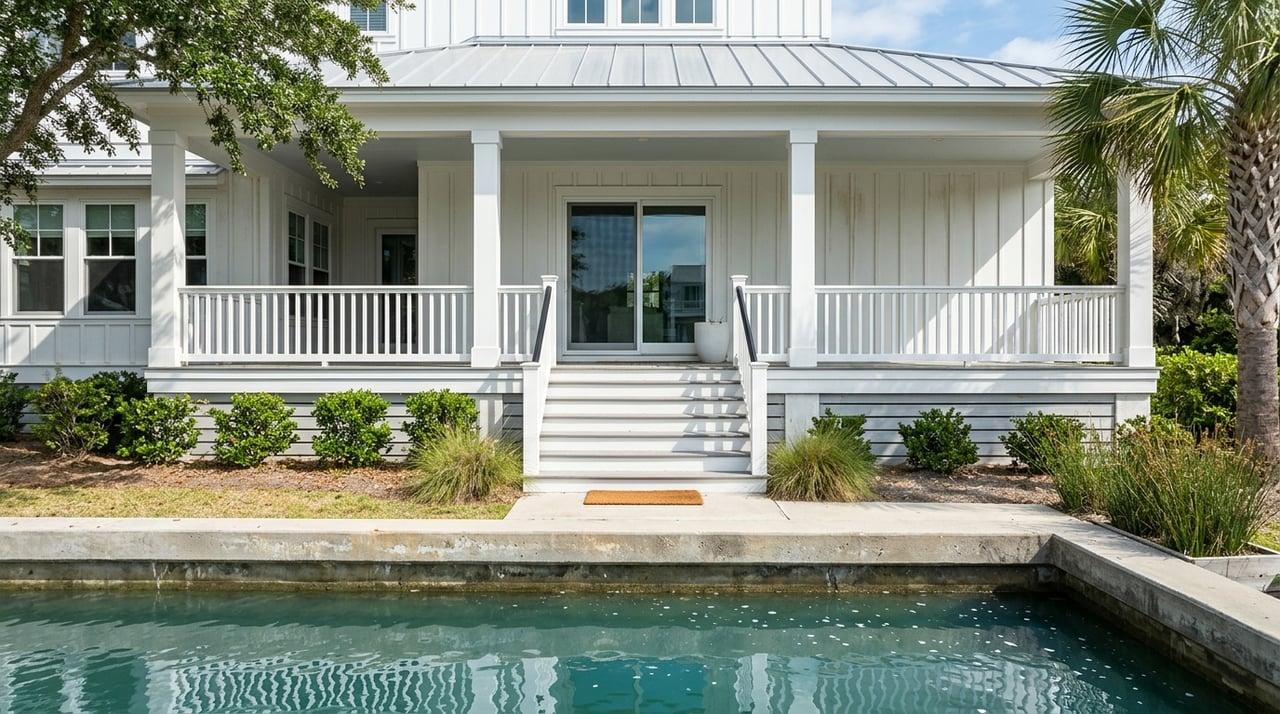
If you are selling a bayfront home in Point Clear, you are not just listing square footage and finishes. You are bringing a coastal asset to market, and buyers will look closely at the water access, shoreline condition, flood factors, and the overall lifestyle the property offers. When you prepare the home the right way, you can reduce buyer hesitation and present the property with more confidence. Let’s dive in.
Price the home as bayfront property
A bayfront home in Point Clear should be priced against other true bayfront properties, not simply against nearby inland homes. On the Eastern Shore, view quality, access to the water, elevation, flood zone, and the condition of shoreline improvements can shape value just as much as the interior.
That means a beautiful kitchen alone will not carry the full pricing conversation. Buyers looking at Mobile Bay often want to understand how the lot functions, what the outdoor living experience feels like, and whether the shoreline features add value or future work.
Separate bayfront, bay-view, and inland comps
Not every water-adjacent home competes in the same lane. A true bayfront property offers a different experience than a bay-view home or an inland property near the water, so your pricing strategy should reflect those differences.
In practice, that means your comparable sales should account for more than address and bedroom count. The strength of the view, the quality of access, and the usability of porches, yards, and waterfront areas all matter when buyers decide what a Point Clear property is worth.
Flood zone details affect value
If your home is in or near a Special Flood Hazard Area, buyers may weigh flood insurance costs and construction standards as part of their offer decision. Coastal high-hazard Zone V areas are treated differently from more inland lots, and Baldwin County requires specific flood documentation for certain permits in coastal zones.
This does not automatically reduce value, but it does affect how buyers assess risk and monthly ownership costs. A clear, well-documented property file can help support your asking price and reduce uncertainty.
Build your pre-listing file early
For a bayfront sale, documentation matters almost as much as presentation. Buyers and their lenders often want answers about permits, repairs, flood records, and shoreline work before they feel comfortable moving forward.
Getting organized before the listing goes live can save time later. It also helps you avoid the stress of scrambling for records after a buyer starts asking detailed questions.
Understand Alabama disclosure rules
Alabama follows caveat emptor for existing homes. According to the Alabama Real Estate Commission, sellers and agents generally do not have a broad duty to disclose defects unless asked, but they must not misrepresent conditions or conceal issues that present an immediate health or safety risk.
That legal framework makes accuracy especially important. If you know your facts, have your records ready, and present the property honestly, you put yourself in a stronger position during negotiations.
Get a pre-listing inspection
A pre-listing inspection can be especially helpful for a coastal home. The Alabama Real Estate Commission recommends using a home inspector to verify property condition, and Alabama home inspectors are licensed by the Division of Construction Management.
For a Point Clear bayfront property, it is smart to evaluate roof condition, moisture intrusion, foundation or crawlspace concerns, windows and doors, drainage, HVAC performance, and any history of storm or flood repairs. Inspection findings can guide your repair plan, shape your pricing, and help you answer buyer questions with confidence.
Gather flood documents and elevation records
Your flood file should be easy to access before the home hits the market. Baldwin County notes that its floodplain ordinance applies to special flood hazard areas, and certain zones may require a temporary benchmark or elevation certificate before permit issuance.
In Coastal A and V zones, a coastal design certificate is also required before permit issuance. If you already have these records, having them ready can make your home feel more transparent and easier to evaluate.
Organize dock and shoreline permits
If your property includes a dock, pier, bulkhead, seawall, or shoreline stabilization work, pull together the full paper trail. ADEM states that shoreline stabilization and other coastal work may require permits, and the applicable permit framework can also cover piers, boat slips, dredging, and shoreline or bank stabilization.
Useful records include permits, engineering letters, invoices, and completion documents. Buyers want to know not only what is there, but whether it was properly authorized and maintained.
Document storm repairs clearly
If the property had repairs after a storm, be prepared to show what was repaired, who completed the work, and whether the work was authorized. Clear repair records help buyers and lenders understand the difference between routine maintenance and larger capital improvements.
That clarity can make a real difference in buyer confidence. For legacy waterfront homes especially, uncertainty tends to slow down offers.
Stage for the waterfront lifestyle
Bayfront homes sell on feeling as much as function. Your goal is to help buyers imagine the ease of daily life on the water, from morning coffee on the porch to sunset views across Mobile Bay.
That lifestyle story should come through immediately, especially online. Many buyers begin their search digitally, so the listing has to make a strong first impression before they ever schedule a showing.
Focus on what buyers see first
National buyer research shows online search is central to the home search process, and photos are one of the most useful listing features. Buyers also spend weeks searching and often narrow options significantly online before they ever tour in person.
That means your photos, layout flow, and waterfront presentation need to do real work. A bayfront listing should feel polished, bright, and easy to understand at a glance.
Highlight sightlines and outdoor space
For a Point Clear bayfront home, one of the biggest staging priorities is preserving the connection to the water. Open sightlines, clean windows, uncluttered rooms, and tidy porches or patios help the property read as a coastal lifestyle home rather than just another house.
Outdoor areas deserve the same attention as interior rooms. Buyers often care deeply about how the lot functions, whether the waterfront is easy to enjoy, and how the home lives from inside to outside.
Start with simple improvements
Before spending heavily on cosmetic updates, focus on the basics that improve presentation quickly. Industry staging research shows that decluttering, whole-home cleaning, curb appeal work, and professional photos are among the most common and useful pre-listing steps.
Those improvements often provide a cleaner return than chasing highly personal design changes. They also help your marketing feel more elevated from day one.
Use virtual staging carefully
Virtual staging can be useful, especially if a room is empty or hard to interpret. But if photos are materially altered, those changes should be disclosed so buyers are not misled.
That matters in any market, but especially in a waterfront sale where buyers are already evaluating details closely. Trust starts with accurate presentation.
Time the market with coastal realities in mind
Timing matters with any listing, but it can matter even more on the coast. Atlantic hurricane season runs from June 1 through November 30, so it is often wise to complete inspections, documentation, repair decisions, and photography before the season is fully underway.
This is not a legal deadline. It is simply a practical way to reduce delays and present the property under more predictable conditions.
Prepare before peak weather risk
If you wait until storm season is active, you may face interruptions in scheduling, repairs, or buyer travel. Even when no storm is directly impacting Point Clear, coastal buyers may become more cautious during periods of active weather.
By preparing early, you give yourself more control over the listing launch. You also create more time to address inspection items and gather missing paperwork.
Tell the full waterfront story
A strong bayfront marketing plan should answer the questions serious buyers are already asking. What is the view like day to day? How does the lot function? Are the shoreline improvements permitted and maintained? What flood-related documents are available?
When those answers are built into the listing strategy, buyers can focus on the property’s value instead of wondering what might be missing. That usually leads to stronger interest and better-quality conversations.
Use a seller checklist before launch
A simple checklist can keep your sale on track and help you avoid common slowdowns. For a Point Clear bayfront home, these are some of the most important items to handle before listing:
- Gather the flood map, elevation certificate, and any available coastal design documentation.
- Assemble permits, invoices, and repair records for docks, piers, bulkheads, seawalls, dredging, or shoreline work.
- Review any storm-related repairs and organize supporting records.
- Schedule a pre-listing inspection and treat the findings as pricing information as well as repair guidance.
- Declutter, deep clean, improve curb appeal, and invest in professional photography.
- Disclose material photo edits if virtual staging or significant enhancements are used.
Selling a bayfront home in Point Clear is part pricing strategy, part documentation exercise, and part lifestyle marketing. When you approach all three together, you give buyers the transparency they want and give your property the presentation it deserves.
If you are thinking about selling and want a plan tailored to your home, shoreline features, and timing goals, connect with Andrea Kaiser Shilston & Eva Wilmott for a private consultation.
FAQs
What makes selling a bayfront home in Point Clear different?
- Bayfront homes are often evaluated as coastal assets, so buyers may focus on view, water access, flood exposure, and the condition and documentation of shoreline improvements in addition to the home itself.
What documents should Point Clear bayfront sellers gather before listing?
- Important records can include flood maps, elevation certificates, coastal design documentation if applicable, and permits or invoices for docks, piers, bulkheads, seawalls, dredging, shoreline stabilization, and storm repairs.
Why should sellers in Point Clear get a pre-listing inspection?
- A pre-listing inspection can help you identify roof, moisture, drainage, foundation, HVAC, and storm-repair issues early so you can price more accurately and respond to buyer questions with better information.
How should a bayfront home in Point Clear be staged?
- Focus on clean sightlines, polished outdoor spaces, uncluttered rooms, clean windows, and strong curb appeal so the listing clearly shows the connection between the home and the waterfront lifestyle.
When is the best time to prepare a bayfront home for sale in Point Clear?
- It is often smart to finish inspections, paperwork, repair decisions, and photography before hurricane season is underway, since Atlantic hurricane season runs from June 1 through November 30.
Do permits matter when selling a Point Clear waterfront property?
- Yes. If your home has a dock, pier, bulkhead, seawall, or other shoreline work, buyers may want records showing what was done, whether permits were required, and how the improvements were completed and maintained.