Looking for a place on the Eastern Shore that feels quieter, older, and more rooted than the busy centers nearby? Historic Montrose offers a different kind of coastal living, with shady streets, generous lots, historic homes, and occasional views of Mobile Bay. If you are wondering what it is really like to live here, this guide will help you understand the setting, housing character, and practical details that matter before you buy. Let’s dive in.
What makes Historic Montrose unique
Historic Montrose is an unincorporated residential village in Baldwin County with deep roots on the bay. Its National Register nomination describes a landscape shaped by live oaks, pines, spacious lots, and occasional views of Mobile Bay.
The area developed in the mid-19th century from Steedman’s Landing and Sibley City. Over time, it became a popular summer-home location for Mobile families, which still helps explain its relaxed, residential feel today.
Montrose Historic District is listed on both the National Register of Historic Places and the Alabama Register of Landmarks and Heritage. That historic designation gives the area a sense of continuity that many buyers notice right away.
Montrose feels residential first
One of the clearest things about Historic Montrose is that it reads as a residential enclave, not a town center. The district is entirely residential, which shapes the pace, the streetscape, and the overall experience of living there.
If you are comparing Montrose with nearby Fairhope or Daphne, the difference is helpful to understand. Fairhope’s official materials highlight walkability, an active arts scene, downtown floral displays, and strong pedestrian and bike infrastructure, while Daphne emphasizes bay access, boardwalks, trails, and a fast-growing community.
Montrose offers something quieter. Instead of a concentrated commercial core, the appeal here is more about porches, trees, history, and bay air.
Historic homes with Gulf Coast character
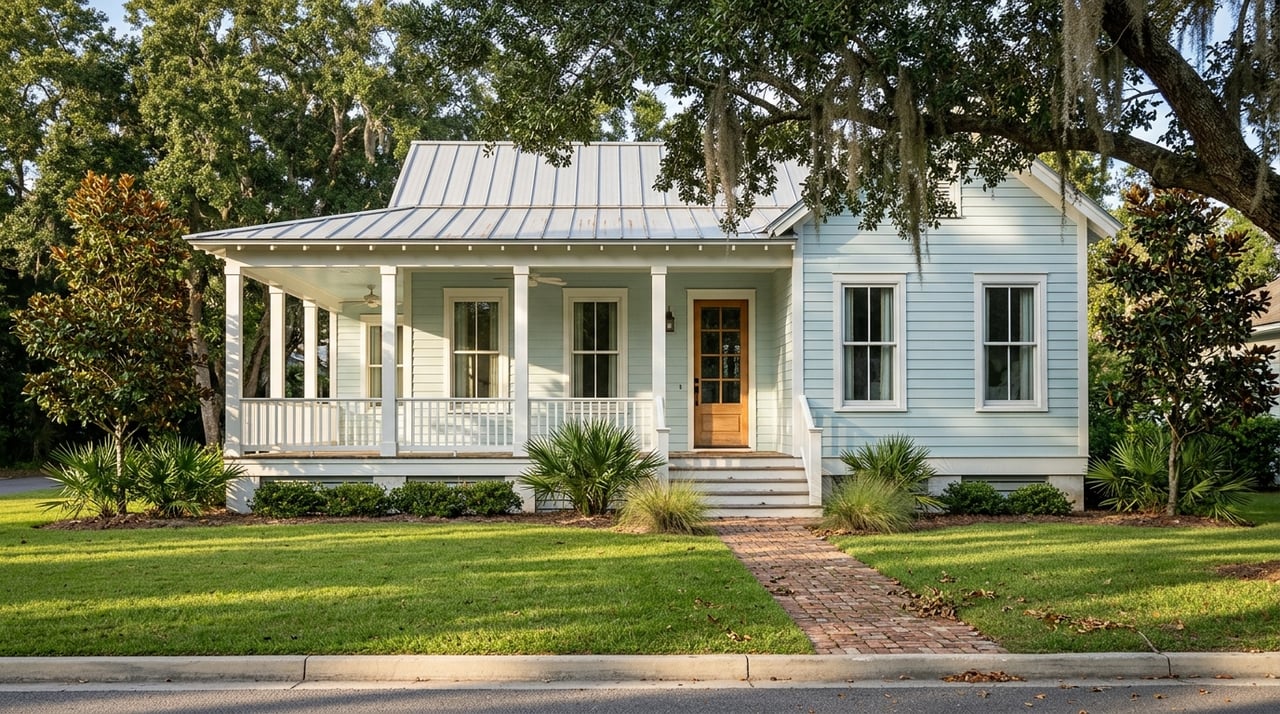
For many buyers, the homes are a major part of Montrose’s draw. The signature house type in the district is the Creole Cottage, known for its low profile, clapboard siding, gabled roof, full-width recessed porch, and simple, symmetrical Gulf Coast details.
According to the historic district nomination, about 15 architecturally or historically significant buildings are identified in the district, and nine of those are Creole Cottage examples. That gives the neighborhood a distinct architectural identity without making every home look the same.
You will also find variety beyond the cottages. The district includes bay-front homes from the 19th century, a later house from around 1930, a relocated mid-19th-century Mobile house with Greek Revival influence, board-and-batten cottages, a stone house, and other 20th-century additions.
That mix matters if you are drawn to historic character but do not want a neighborhood that feels overly uniform. Montrose is historic, but it is not frozen in time.
Spacious lots shape daily life
The layout of Montrose is one of its most unusual features. The town was laid out in a grid of 27 blocks of nine acres each, along with 26 bay-front lots of 4.5 acres each.
That historic pattern still influences how the area feels today. Even when homes differ in age and style, the larger lot sizes can create a sense of openness that is harder to find in more densely developed coastal areas.
For a buyer, that often translates into practical lifestyle benefits such as more separation between homes, mature trees, and a stronger sense of privacy. In a coastal market where lot size can shape everything from views to outdoor living, that is a meaningful part of Montrose’s appeal.
Live oaks and bay breezes define the setting
Some neighborhoods are best understood through numbers. Montrose is better understood through what you notice when you arrive.
The historic nomination specifically points to notable live-oak groupings along Adams Street between Main and Second, and at Second and Sibley. Those trees are part of the village’s visual identity and help create the canopy effect many buyers picture when they think of classic Gulf Coast neighborhoods.
The bay also plays a role, even when you are not directly on the water. Occasional views of Mobile Bay and the exposure to bay breezes contribute to the sensory side of living here, which is one reason Montrose stands out for buyers who want atmosphere as much as square footage.
What buyers should know before purchasing
Historic charm comes with practical considerations, and it is smart to understand them early. In Montrose, two of the biggest are historic review and flood review.
Historic review for exterior changes
Baldwin County’s Architectural Preservation Review Board oversees Montrose. Its authority covers exterior changes for structures that are erected, renovated, or demolished within the district.
If you are considering updates to a historic property, that review process is worth discussing before you close. It can affect how you plan exterior improvements and how you think about long-term stewardship of the home.
Flood review and map checks
Baldwin County also directs property owners to FEMA flood maps. The county states that development in Special Flood Hazard Areas must comply with the county floodplain ordinance that became effective on February 20, 2024.
For buyers, this means flood-zone review should be part of your early due diligence. If you are looking at a bay-front home or any property with potential floodplain considerations, understanding the map status and local requirements can help you plan with more confidence.
Who tends to love living in Montrose
Historic Montrose often appeals to buyers who want a more atmospheric residential setting on the Eastern Shore. If you are drawn to mature trees, older homes, and a quieter pace, the area can feel very different from places built around retail, entertainment, or newer master-planned growth.
It can also be a fit if you value being near the amenities of Fairhope and Daphne without living in the middle of those more active environments. That balance is part of what makes Montrose compelling for people who want access to the Eastern Shore lifestyle with a more tucked-away feel.
How Montrose fits into an Eastern Shore search
If you are still narrowing your search, it helps to think of Montrose as one distinct option within a larger Baldwin County picture. Fairhope may appeal if you want a walkable downtown and arts-centered setting, while Daphne may stand out if you want strong access to trails, boardwalks, and bay activity.
Montrose offers a different value. It is about historic residential character, canopy streets, spacious lots, and the subtle presence of the bay.
That distinction can be important when you are deciding what kind of daily experience you want. The best neighborhood for you is not always the one with the most activity. Sometimes it is the one that feels the most grounded when you pull into the driveway.
Why local guidance matters in Montrose
In a place like Historic Montrose, details matter. Two homes can look similar online and come with very different considerations around historic review, lot configuration, bay exposure, or future exterior plans.
That is where local research and careful guidance become especially valuable. When you understand both the character of the neighborhood and the county processes that may affect a property, you are in a much better position to make a strong decision.
If you are exploring Historic Montrose or comparing it with other Eastern Shore communities, Andrea Kaiser Shilston & Eva Wilmott can help you evaluate homes, neighborhoods, and next steps with local insight and a high-touch approach.
FAQs
What is Historic Montrose in Baldwin County, Alabama?
- Historic Montrose is an unincorporated, entirely residential village in Baldwin County known for historic homes, live oaks, spacious lots, and occasional views of Mobile Bay.
What type of homes are common in Historic Montrose?
- The signature historic house type is the Creole Cottage, and the district also includes bay-front historic homes, board-and-batten cottages, a stone house, and later 20th-century additions.
Are lots in Historic Montrose larger than in other areas?
- The historic layout included 27 blocks of nine acres each and 26 bay-front lots of 4.5 acres each, which contributes to the area’s notably spacious feel.
Does Historic Montrose have rules for renovating homes?
- Yes. Baldwin County’s Architectural Preservation Review Board oversees exterior changes for structures that are erected, renovated, or demolished within the district.
Do buyers in Historic Montrose need to check flood zones?
- Yes. Baldwin County directs property owners to FEMA flood maps, and development in Special Flood Hazard Areas must follow the county floodplain ordinance effective February 20, 2024.
How is Historic Montrose different from Fairhope and Daphne?
- Historic Montrose is more of a quiet residential enclave, while Fairhope highlights a walkable downtown and arts activity, and Daphne emphasizes trails, boardwalks, bay access, and growth.