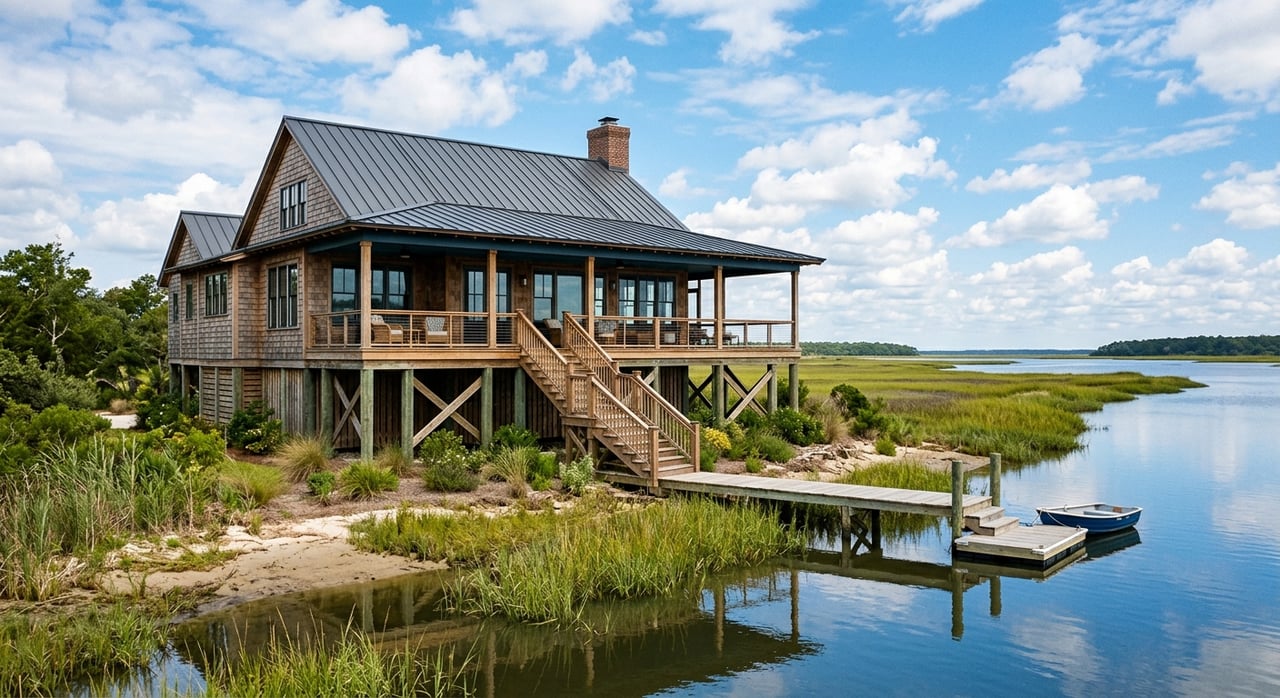
If you are thinking about buying a second home in Point Clear, you are probably looking for more than square footage. You are looking for a place that feels like a getaway, fits how you want to spend your time, and still makes sense as a long-term property decision. In Point Clear, that means balancing lifestyle with careful parcel-level research. Let’s dive in.
Why Point Clear draws second-home buyers
Point Clear offers a distinct blend of bayfront living, resort access, and historic character. The area is home to the Grand Hotel Golf Resort & Spa, which includes golf, spa, beach, waterfront, tennis, and pickleball amenities. Nearby Fairhope adds more of the lifestyle many second-home buyers want, including a walkable bayfront pier, bluff-top parks, public boat ramps, and access to trail connections for walking and cycling.
For many buyers, that means your decision is not just about the house itself. It is also about how easily you can enjoy the water, outdoor recreation, and the broader Eastern Shore lifestyle when you are in town. That lifestyle factor often shapes the search as much as price or lot size.
Bayfront versus interior homes
One of the biggest choices you will make is whether to buy directly on the bay or choose an interior property nearby. Both can support a second-home lifestyle in Point Clear, but they come with different questions and ownership considerations.
What bayfront ownership can mean
A bayfront home gives you the most direct connection to the water. You may gain views, shoreline access, and a stronger sense of being fully immersed in the bayfront setting. For many second-home buyers, that is the core appeal.
At the same time, bayfront ownership usually brings more site-specific due diligence. Baldwin County points property owners to FEMA flood maps as the official source for flood-hazard mapping, and county floodplain rules apply in special flood hazard areas. In those areas, no habitable area is allowed below Base Flood Elevation plus 1 foot of freeboard, and an Elevation Certificate is required before a permit is issued.
For some coastal properties, additional documentation may also be required. Baldwin County notes that certain projects can need added certificates as well as engineer or architect signoff. If you are considering a bayfront home, it is wise to understand these requirements before you close and especially before you plan future improvements.
What interior homes can offer
Interior homes can still give you access to the Point Clear lifestyle without placing you directly on the shoreline. You may still be near the bay, nearby recreation, and the amenities that make the area attractive for a second home.
That said, interior does not mean simple by default. Flood-zone status is still parcel-specific, and some properties may also fall under historic-district review for exterior changes. In practical terms, an off-water home may reduce some shoreline-specific concerns, but it does not remove the need for careful research.
Historic district rules matter
Point Clear has a strong historic identity, and that can affect what you can change on a property. A substantial part of the area is regulated as the Point Clear/Battles Wharf Historic District, which Baldwin County says was designated on October 15, 1985.
The county’s Architectural Preservation Review Board oversees exterior changes in the district. That review can apply to new construction, renovation, relocation, and demolition. It does not apply to interior design or interior plans, but if you expect to update exterior features, add on, or significantly alter the home, this review process should be part of your planning.
For second-home buyers, this is especially important if you are purchasing with renovation in mind. A home’s charm and setting may be a major part of the appeal, but those same qualities can come with added review for exterior work.
Understand second-home tax treatment
Property taxes are one of the most important ownership costs to understand before you buy. In Baldwin County, tax treatment depends on how the property is classified.
The county’s property tax calculator treats a second home as Class III property, which is assessed at 10 percent. Rental property is treated as Class II and assessed at 20 percent. The county also states that second-home owners do not qualify for a homestead exemption.
One detail matters a great deal if you are thinking about occasional rentals. Baldwin County says that if a property is rented even one day during the year, it is considered rental property for the whole year. That makes it important to think through your intended use before assuming your tax picture will stay the same.
Why timing matters for valuation
Baldwin County appraises real property annually based on the property as it existed on October 1 of the prior year. Annual valuation notices are mailed in late April, and owners have 30 days to protest a valuation.
If you buy a second home in Point Clear, it helps to track your parcel information throughout the year. The county also notes that buyers should review their parcel online so information stays current. This can be especially useful if you are making improvements or confirming how the property is recorded.
Confirm utilities before closing
Utility service in the Point Clear area can vary by parcel and community block. According to Baldwin County’s community guide, Point Clear-area utility providers may include Baldwin EMC or Riviera Utilities for electricity, Fairhope Utilities for gas and water, Baldwin County Sewer for sewer or septic in the community listing, and AT&T or Mediacom for internet.
Because service can differ from one address to the next, do not assume a neighboring property has the same setup as the one you are buying. Before closing, confirm which providers serve the parcel and whether the utility arrangement matches how you plan to use the home.
Plan ahead for permits and upgrades
Many second-home buyers want to personalize the property after closing. In Point Clear, that means understanding permit requirements early, especially if you are buying an older home or a property that may need updates.
Baldwin County requires permits for many common projects, including:
- New construction
- Additions
- Decks and porches
- Stairs and handrails
- Windows and doors
- Accessory structures
- Roofs
- HVAC work
- Electrical work
- Plumbing work
- Pools
- Demolitions
If the property is in a flood zone or floodway, additional floodplain documentation may also be required. Depending on the site, that can include elevation certificates and other flood-related certifications. For a second-home buyer, this is a key reminder that renovation budgets and timelines should include local review and permitting steps.
Think about storm season as an owner
Owning a second home on the Gulf Coast means planning around the calendar, not just your travel schedule. NOAA states that the Atlantic hurricane season runs from June 1 through November 30.
If you will only use the home part of the year, storm season should shape how you think about maintenance, insurance reviews, and pre-season preparation. Even if you are buying for leisure, ownership works best when you plan for the practical side of coastal property care.
Rental plans need parcel-specific review
Some second-home buyers want the option to rent the property part-time. In this area, rental rules can be highly specific to jurisdiction, parcel location, and how the property will be used.
In nearby Fairhope, the city states that rental activity within the city limits or police jurisdiction requires a business license, rentals under 180 days are subject to lodging tax, and short-term rentals under 30 days are limited to specific zoning districts. Baldwin County also stresses parcel-level verification of tax district and building-jurisdiction boundaries before you assume any rule applies.
The key takeaway is simple: if rental use is part of your plan, verify the exact parcel and jurisdiction first. In Point Clear, the most important question is often not whether rentals are common in the broader area, but what rules apply to this specific address.
Focus on the parcel, not just the lifestyle
Point Clear has a lot to offer second-home buyers. You can find bay access, resort-adjacent amenities, historic character, and easy access to the Eastern Shore lifestyle that draws people back year after year.
But a smart purchase here depends on more than loving the setting. Taxes, flood requirements, historic review, utility service, permit needs, and possible rental rules can all change from one property to the next. The strongest buying strategy is to start with the parcel, then evaluate the ownership costs and long-term fit.
If you want guidance tailored to your goals in Point Clear, Andrea Kaiser Shilston & Eva Wilmott can help you evaluate the details behind the lifestyle so you can move forward with confidence.
FAQs
What should you check first when buying a second home in Point Clear?
- Start with the specific parcel. Flood-zone status, historic-district review, utility service, tax classification, and possible rental rules can all vary by address.
What is the tax difference between a second home and a rental property in Baldwin County?
- Baldwin County treats a second home as Class III property assessed at 10 percent, while rental property is Class II assessed at 20 percent.
Can an interior home in Point Clear still have restrictions?
- Yes. An interior home may still have parcel-specific flood-zone issues or fall within the Point Clear/Battles Wharf Historic District for exterior review.
What exterior work may require permits in Baldwin County?
- Common projects like roofs, decks, porches, windows, doors, pools, additions, accessory structures, HVAC, electrical, plumbing, and demolitions may require permits.
Why does storm season matter for Point Clear second-home owners?
- NOAA says Atlantic hurricane season runs from June 1 through November 30, so part-time owners should plan ahead for maintenance, insurance reviews, and seasonal preparation.
Can you rent out a second home in the Point Clear area?
- Possibly, but the rules are jurisdiction-specific and parcel-specific, so you should verify the exact address, tax district, and local requirements before making plans.